

Backpacks & Gearbags, Bipods, Camping, Exercise, Gear, Hiking & Biking Gear, Hunting, Marine & Watersports, Metal Detecting, Safety, Sports Apparel
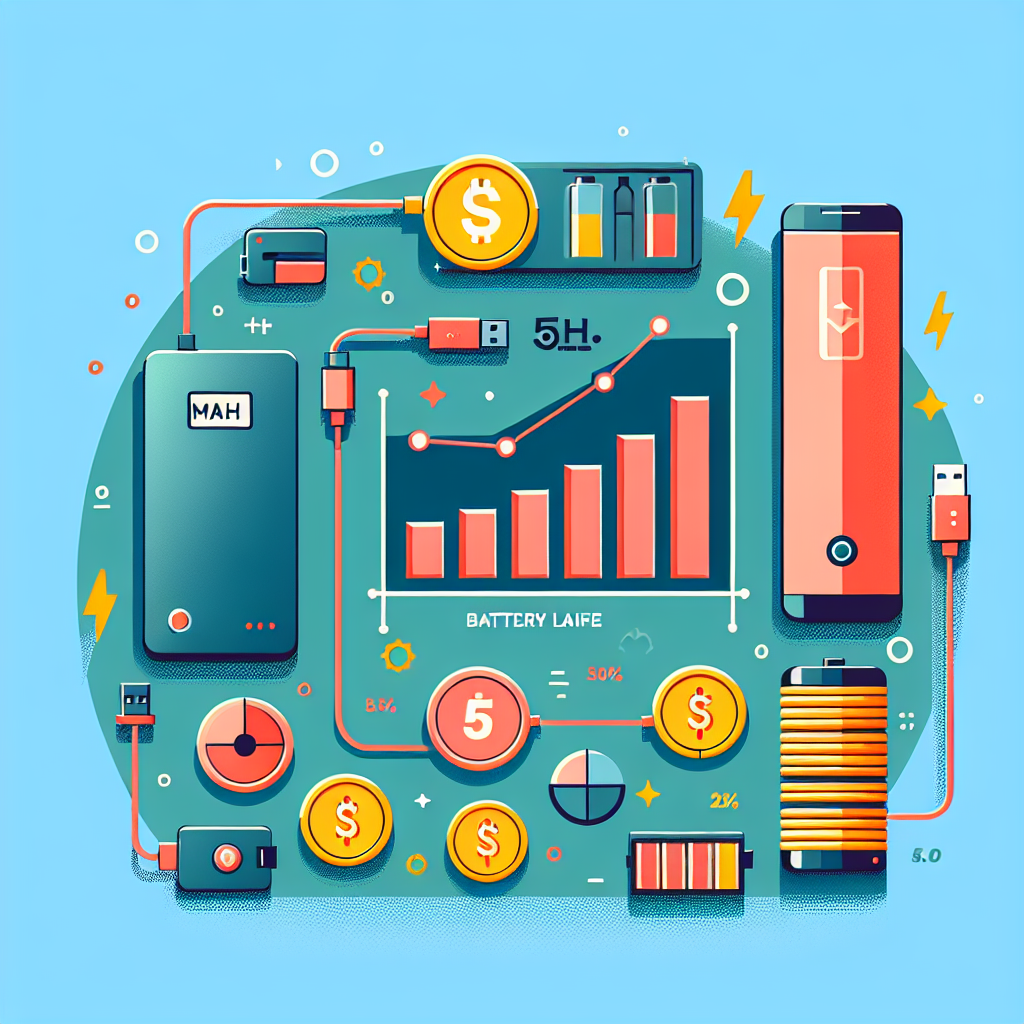
Comparing Capacity: mAh vs. Battery Life in Power Banks
Apr
When it comes to powering up our devices on the go, power banks have become our best friends—like that reliable buddy who always shows up with snacks. But with an array of options available, understanding power bank specifications can feel like decoding ancient hieroglyphics. Among the most notable specs are mAh (milliamp hours) and battery life. But worry not! We’re here to break this down, sprinkling in a bit of humor along the way.
Understanding mAh: The Power Bank’s Sidekick
First things first, let’s talk mAh, which stands for milliamp hours. If power banks were superheroes, mAh would be their trusty sidekick, always ready to save the day (or your phone’s battery). Essentially, mAh is a measure of electrical capacity. The higher the mAh rating, the more charge a power bank can hold.
For example, if you have a power bank with a rating of 10,000 mAh, it means it can technically provide 10,000 milliamps for one hour, or 1,000 milliamps for ten hours. In real-world terms, that means if your smartphone has a battery capacity of around 3,000 mAh (which is quite common), you could fully charge it roughly three times with a 10,000 mAh power bank. Just remember, this is theoretical; actual performance may vary based on efficiency and other factors—a bit like how your “three servings of salad” might feel more like one serving of “fractal salad” after you’re done.
Battery Life: The Reality Check
Now, battery life is where things get a tad trickier. It’s not simply a matter of how much juice your power bank holds; it’s also about how effectively that juice is used. Battery life is influenced by various factors, including the energy efficiency of your device, the charging speed, and even how you use your devices while they’re charging.
Imagine you’re trying to fill a bathtub with holes—the size of the holes, the water pressure, and other factors play a vital role in how long it takes to fill. Similarly, a power bank’s battery life will depend not only on its mAh rating but also on how quickly it dispenses power to your devices. If your phone is using power like a teenager on a shopping spree, it might drain that power bank faster than you’d like!
Comparing mAh and Battery Life
When comparing mAh and battery life, it’s crucial to understand that while they’re related, they aren’t the same creature. Think of mAh as the size of the gas tank in a car, while battery life is how far the car can go on that gas. A power bank with a high mAh rating doesn’t automatically mean it will provide long battery life for all devices.
For instance, a 20,000 mAh power bank might last longer in charging a smaller device, whereas a less efficient device could sap that power faster than a child sneaking cookies out of the pantry. As a practical example, if you charge a power-hungry tablet and a modest smartphone with the same 10,000 mAh power bank, expect the tablet to steal the show (and the juice) quicker.
Practical Considerations
When choosing the right power bank, consider a few practical tips:
-
Device Compatibility: Not all devices charge at the same rate. A quick-charge phone can fill its battery swiftly, while older models might take their sweet time. Choose wisely!
-
Efficiency Ratings: Look for power banks with high conversion rates (around 85% or better). Anything less, and you’re losing precious power to “vampire” energy.
-
Daily Usage vs. Emergency Situations: If you’re out and about all day, a higher mAh may serve you better. For occasional use, a smaller capacity could suffice without making your pocket feel like a weightlifting exercise.
Conclusion: The Power to Choose
In conclusion, understanding mAh and battery life is like having a map in uncharted territory—it’s essential for navigating the world of power banks. While mAh tells you how much power the bank can theoretically hold, battery life dictates how that power gets used. The next time you find yourself tangled in charging cables and spec sheets, remember: your power bank is not just a box of batteries, but a carefully crafted instrument designed to keep your devices buzzing with joy.
So, whether you’re a road warrior, a social media aficionado, or simply someone with a serious Netflix habit, knowing how to balance mAh and battery life can make your charging experience smoother than a newly polished smartphone screen—no smudges here! Happy charging!

